Mother Cat and Kittens Rescued Near Somerset Firehouse
Their Rescue Highlights the Lifesaving Impact of ARL’s Community Cat Program.
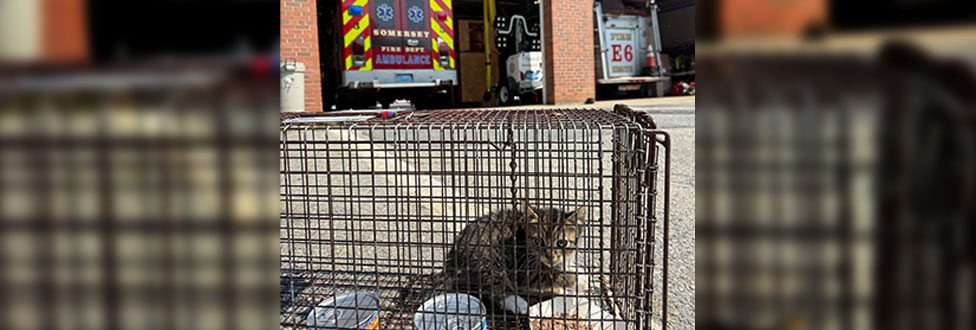
When firefighters at the Somerset Fire Department noticed a mother cat and her four kittens living near the firehouse, they knew the feline family needed help. Although they stayed close by, the mother was understandably too fearful of people to be safely handled.
The Animal Rescue League of Boston’s (ARL) Field Services team safely and humanely trapped the mother cat and her four kittens as part of ARL’s Community Cat Program. After evaluation by ARL’s veterinary staff, it became clear that the kittens and their mother would have different paths forward.
Because the kittens are still young enough to be socialized, they are now safe in ARL’s care, where they will continue to grow until they are old enough to be spayed or neutered and placed for adoption.
Their mother, however, was a healthy adult community cat. Rather than placing her in a shelter environment, where she would likely experience significant stress, ARL spayed, vaccinated, and ear-tipped her before returning her to the outdoor area she knows as home.
While it may seem surprising that a rescued cat would be returned outdoors, returning adult community cats to the outdoor environments they know is the foundation of Trap-Neuter-Return (TNR), the humane approach at the heart of ARL’s Community Cat Program.
Why Was the Mother Cat Returned?
Community cats are unowned cats that live outdoors. Some are feral and have had little to no positive interaction with people, while others may be semi-socialized or former pets that have adapted to living outside.
For healthy adult feral cats like the mother cat rescued in Somerset, returning to the outdoor territory they know after they are spayed and vaccinated is often the best outcome. TNR allows them to live healthier lives while preventing future litters.
How Trap-Neuter-Return Helps Cats and Communities
Through TNR, community cats are humanely trapped, spayed or neutered, vaccinated, ear-tipped, and then returned to the outdoor area they call home. This approach:
- Prevents future litters of kittens.
- Improves the health of individual cats through veterinary care.
- Reduces behaviors associated with mating, including fighting, spraying, and roaming.
- Stabilizes community cat populations over time.
- Improves the relationship between people and outdoor cats by reducing nuisance behaviors.
The mother’s ear tip—a small, painless procedure performed while she was under anesthesia—is a universal sign that a community cat has already been spayed and vaccinated. This helps prevent unnecessary trapping and surgery if she is encountered again in the future.
What Is ARL’s Community Cat Program?
ARL’s Community Cat Program was created to help address the needs of the estimated 700,000 community cats living throughout Massachusetts. Through the program, ARL’s Field Services team works with residents, municipalities, animal control officers, and community partners to develop humane Trap-Neuter-Return plans, provide veterinary care, and determine whether individual cats or kittens are candidates for adoption.
The rescue at the Somerset Fire Department is just one example of this work in action. In this case, four kittens were given the opportunity to find loving homes while their mother returned to her familiar territory healthier and happier.
If you encounter community cats or kittens outdoors, it’s important not to assume they need to be rescued immediately. Every situation is different, and ARL’s Field Services team can help determine the most humane course of action. Learn more about Trap-Neuter-Return services and ARL’s Community Cat Program, or call the ARL Field Services hotline at (617) 426-9170, ext. 563.