Category: Rescue

Four Stray Puppies Rescued on Cape Cod Now in Care of Animal Rescue League of Boston

Community members and animal control officers worked together to bring the puppies to safety

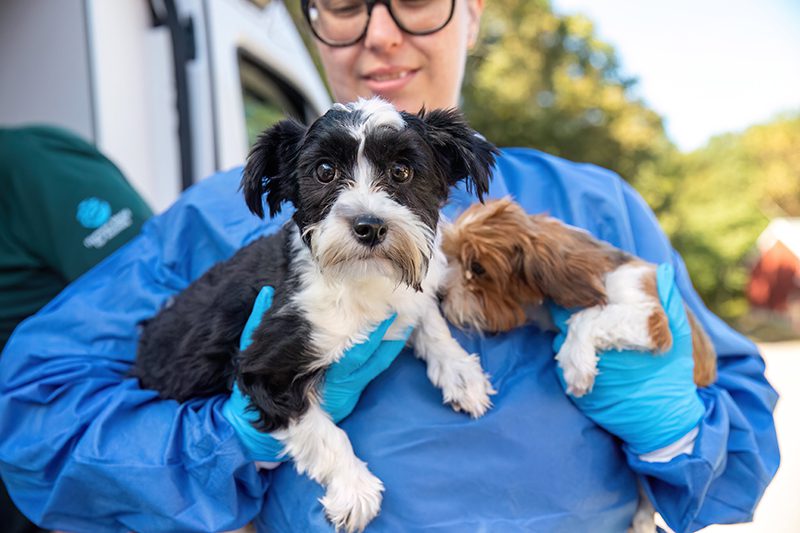
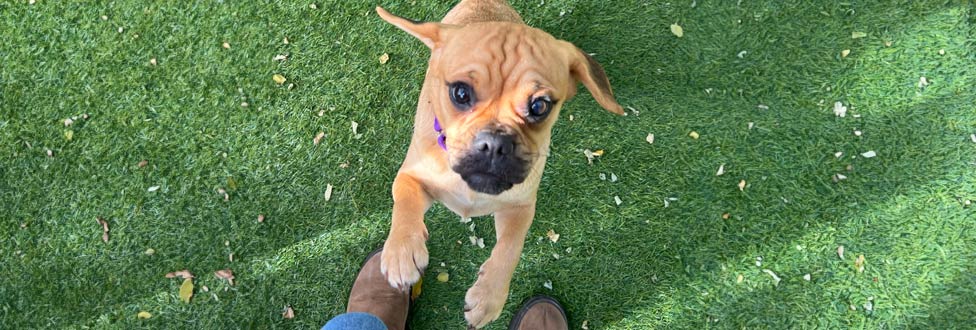
Four mixed-breed puppies are now in the care of the Animal Rescue League of Boston (ARL) after being found wandering along Route 149 in Centerville, MA.

The puppies, affectionately named Wilma, Betty, Pebbles, and Dino, were spotted roaming the area, prompting an incredible community effort to bring them to safety. According to reports, an entire neighborhood came together to ensure they were safely rescued.

Following their rescue, the four puppies were placed in the care of Barnstable Animal Control, where they completed their required stray hold before being transferred to ARL’s Brewster Animal Care & Adoption Center.

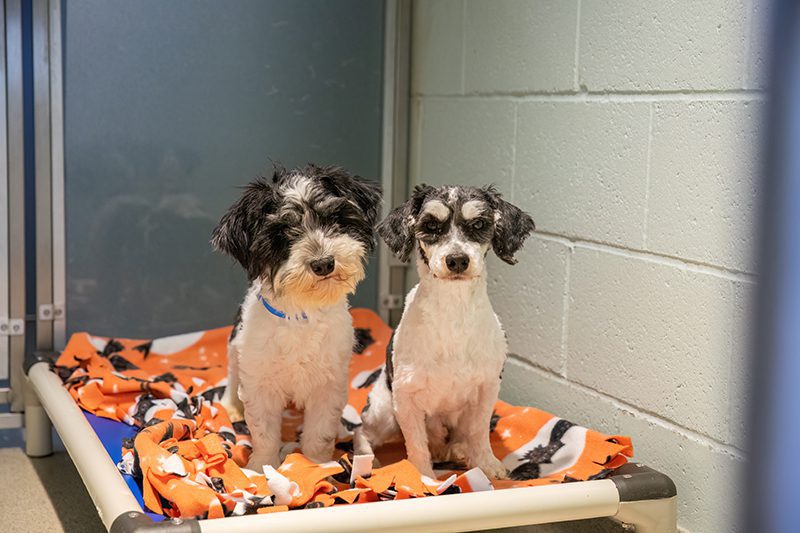
Since arriving at ARL, the puppies have been receiving love and care from staff as they prepare for the next chapter of their lives. Three of the puppies are now available for adoption, while one lucky puppy has already found a loving home with an ARL staff member!
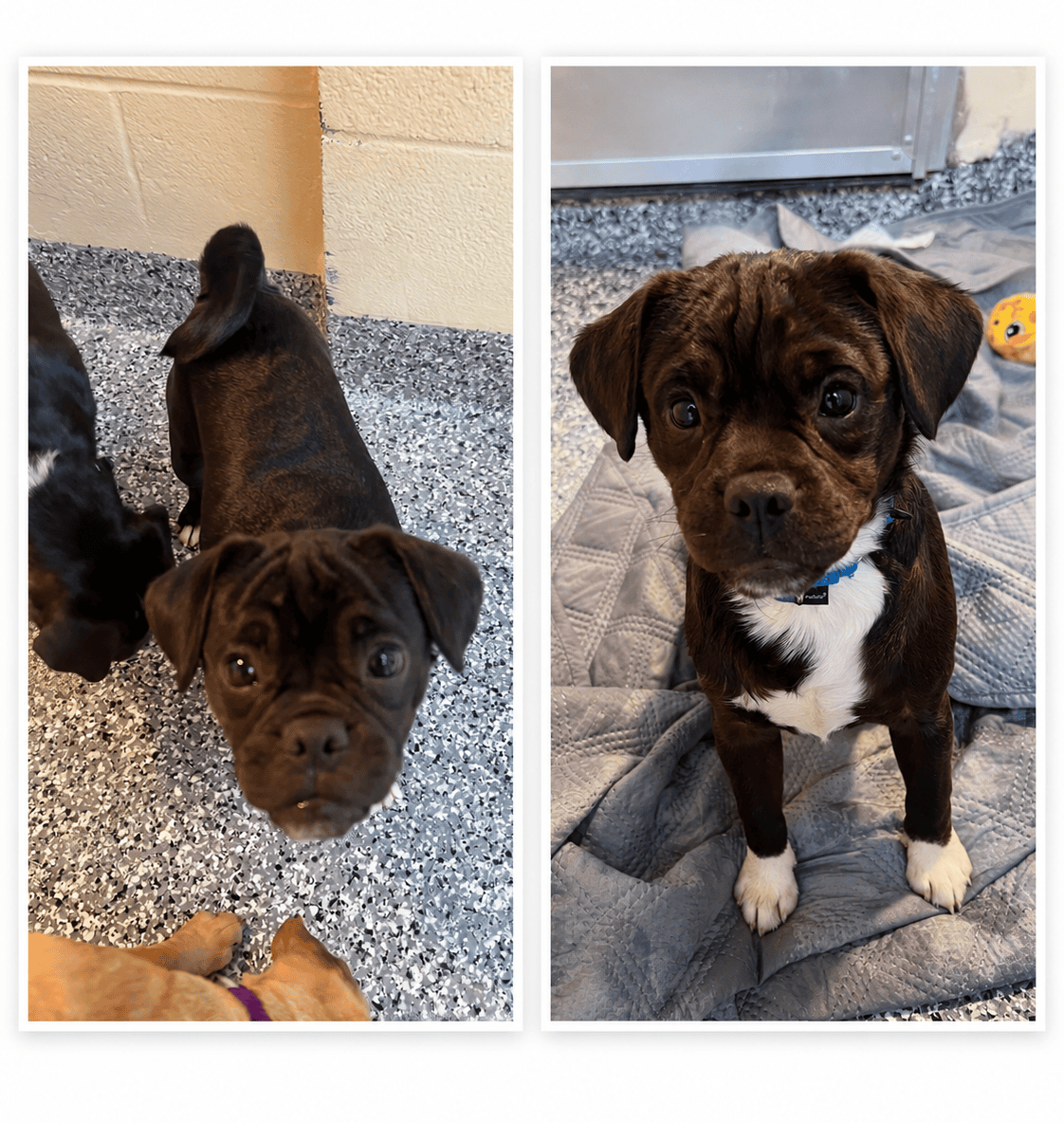
Two photos of an alert brown-and-black puppy: first standing among other puppies on a speckled floor, then posing on a gray blanket, looking curious and sweet.

The puppies, affectionately named Wilma, Betty, Pebbles, and Dino, were spotted roaming along Route 149 in Centerville, MA.

What began as an uncertain journey for these four puppies has turned into a heartwarming story of community compassion and second chances.

ARL is grateful to the neighbors and Barnstable Animal Control who came together to bring the puppies to safety, ensuring the animals receive the care they needed. Their efforts are a reminder of the important communities play in helping animals in need.

Be Part of Their Next Chapter

Three of the puppies are still waiting to find their families, and you could be the one to give them their home!

Interested in welcoming a new companion into your home? Explore animals currently available for adoption.
7-Week-Old Kitten Rescued from I-93 Now in Care of Animal Rescue League of Boston

The kitten, now named “Freeway” is in foster care after being rescued from a busy highway

A tiny kitten is getting a second chance thanks to the quick actions of a good Samaritan who spotted her dodging traffic on a busy Massachusetts highway.

The 7-week-old kitten was found on I-93 in Woburn last week, narrowly avoiding passing vehicles. Fortunately, a good Samaritan was able to safely rescue the kitten from the dangerous situation and get her out of harm’s way.

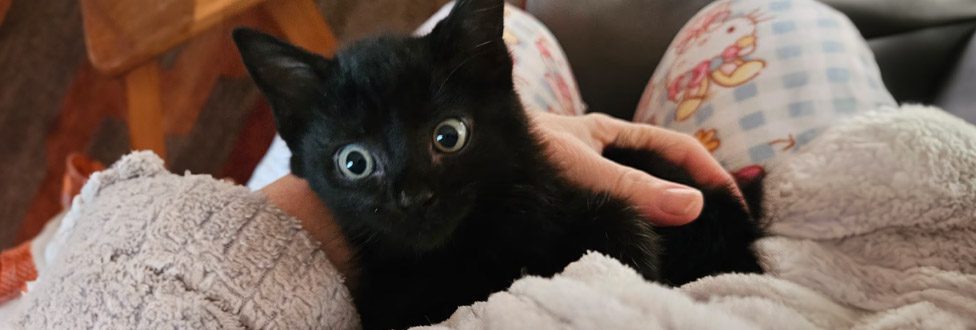
Now named Freeway by staff at the Animal Rescue League of Boston (ARL), the kitten is safe and settling into life in the care of an ARL foster caregiver.

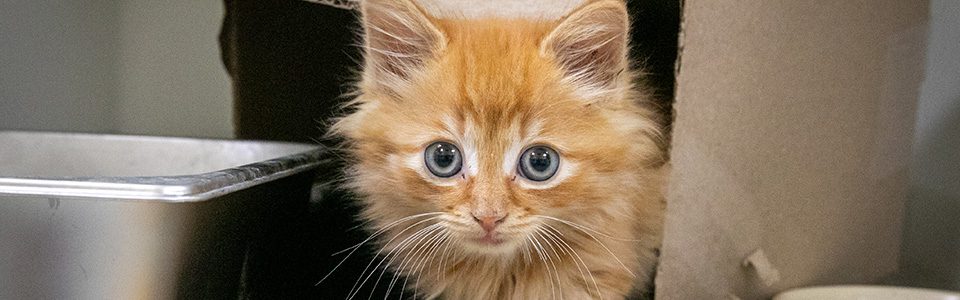
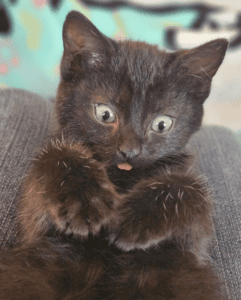
A fluffy dark kitten curls its front paws beneath its chin, staring wide-eyed at the camera with a tiny pink tongue showing; playful, cozy mood.

Safe and sound! Freeway, is getting a second chance at life after a harrowing rescue from I-93 in Woburn.

Despite her frightening start, Freeway now has a bright future ahead of her. She will remain in foster care until she is ready to find a loving home of her own.

What to Do if You See an Animal in Danger

Freeway’s story is an important reminder that animals can find themselves in dangerous and unexpected situations.

If you encounter an animal on a busy roadway or in another potentially dangerous situation, prioritize your own safety and avoid putting yourself or others at risk. Contact local animal control or law enforcement for assistance. For animals on Massachusetts highways, call 911 to alert authorities of the situation.

The Importance of Foster Care

Fosters play a vital role in ARL’s mission, providing animals like Freeway with a safe, nurturing environment while they prepare for adoption.

Whether caring for young kittens, animals recovering from medical procedures, or pets who need a break from the shelter environment, fosters caregivers help ensure animals receive the individualized attention and care they need to thrive.

By opening their homes to animals in need, fosters also help ARL expand its capacity to care for even more animals.

Interested in welcoming an animal in need into your home? Learn more about becoming an ARL foster caregiver.

Give an Animal a Second Chance

While Freeway is not yet available for adoption, ARL has many other cats, dogs, and small animals of all ages, breeds, and personalities waiting for loving homes.

Meet available animals and learn more about the adoption process.


Mother Cat and Kittens Rescued Near Somerset Firehouse

Their Rescue Highlights the Lifesaving Impact of ARL’s Community Cat Program.

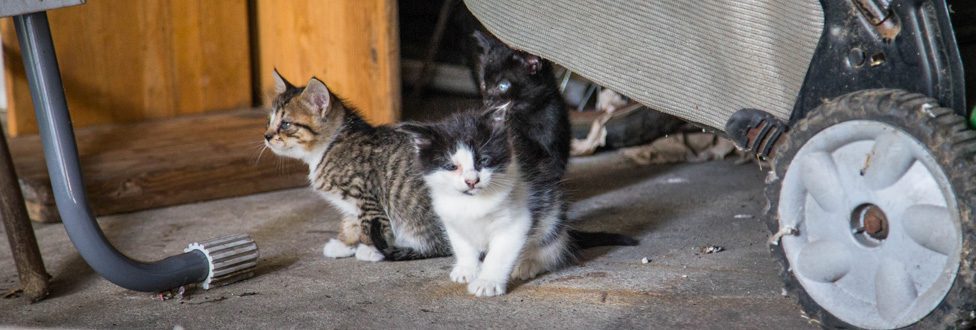
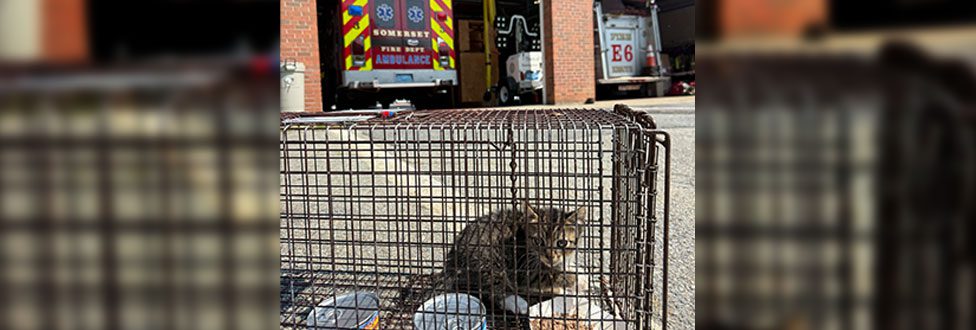
When firefighters at the Somerset Fire Department noticed a mother cat and her four kittens living near the firehouse, they knew the feline family needed help. Although they stayed close by, the mother was understandably too fearful of people to be safely handled.

The Animal Rescue League of Boston’s (ARL) Field Services team safely and humanely trapped the mother cat and her four kittens as part of ARL’s Community Cat Program. After evaluation by ARL’s veterinary staff, it became clear that the kittens and their mother would have different paths forward.

Because the kittens are still young enough to be socialized, they are now safe in ARL’s care, where they will continue to grow until they are old enough to be spayed or neutered and placed for adoption.

Their mother, however, was a healthy adult community cat. Rather than placing her in a shelter environment, where she would likely experience significant stress, ARL spayed, vaccinated, and ear-tipped her before returning her to the outdoor area she knows as home.

While it may seem surprising that a rescued cat would be returned outdoors, returning adult community cats to the outdoor environments they know is the foundation of Trap-Neuter-Return (TNR), the humane approach at the heart of ARL’s Community Cat Program.

Why Was the Mother Cat Returned?

Community cats are unowned cats that live outdoors. Some are feral and have had little to no positive interaction with people, while others may be semi-socialized or former pets that have adapted to living outside.

For healthy adult feral cats like the mother cat rescued in Somerset, returning to the outdoor territory they know after they are spayed and vaccinated is often the best outcome. TNR allows them to live healthier lives while preventing future litters.

How Trap-Neuter-Return Helps Cats and Communities

Through TNR, community cats are humanely trapped, spayed or neutered, vaccinated, ear-tipped, and then returned to the outdoor area they call home. This approach:

  • Prevents future litters of kittens.
  • Improves the health of individual cats through veterinary care.
  • Reduces behaviors associated with mating, including fighting, spraying, and roaming.
  • Stabilizes community cat populations over time.
  • Improves the relationship between people and outdoor cats by reducing nuisance behaviors.

The mother’s ear tip—a small, painless procedure performed while she was under anesthesia—is a universal sign that a community cat has already been spayed and vaccinated. This helps prevent unnecessary trapping and surgery if she is encountered again in the future.

What Is ARL’s Community Cat Program?

ARL’s Community Cat Program was created to help address the needs of the estimated 700,000 community cats living throughout Massachusetts. Through the program, ARL’s Field Services team works with residents, municipalities, animal control officers, and community partners to develop humane Trap-Neuter-Return plans, provide veterinary care, and determine whether individual cats or kittens are candidates for adoption.

The rescue at the Somerset Fire Department is just one example of this work in action. In this case, four kittens were given the opportunity to find loving homes while their mother returned to her familiar territory healthier and happier.

If you encounter community cats or kittens outdoors, it’s important not to assume they need to be rescued immediately. Every situation is different, and ARL’s Field Services team can help determine the most humane course of action. Learn more about Trap-Neuter-Return services and ARL’s Community Cat Program, or call the ARL Field Services hotline at (617) 426-9170, ext. 563.


ARL Field Services Rescues Cat from Tree, Reunites Him with Owner

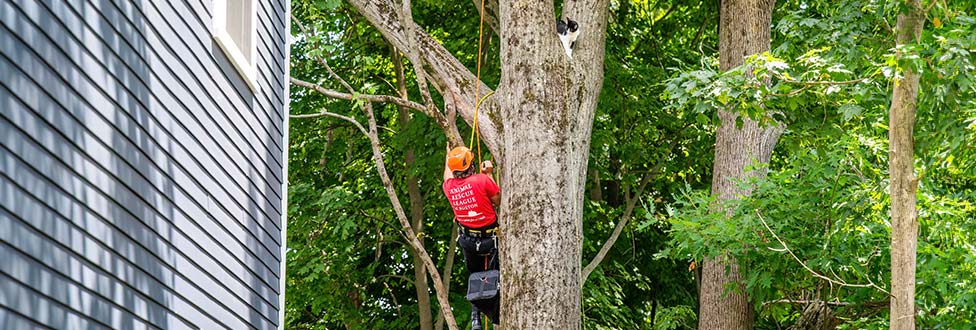
The Animal Rescue League of Boston’s (ARL) Field Services team recently rescued a frightened, 1-year-old cat stranded high in a tree in a Newton neighborhood, safely reuniting him with his grateful owner.

The owner contacted ARL after his cat, Alex, climbed high into a tree and was unable to make his way back down. ARL’s Field Services team quickly responded and began working to bring Alex safely to the ground.

Because Alex was perched so high in the tree, the rescue required specialized equipment, careful planning, and nearly three hours to complete. Using climbing ropes, an ARL Field Services agent scaled the tree, secured the visibly frightened cat, and safely placed him into a carrier before lowering him to the ground.

Following the successful rescue, Alex was reunited with his relieved owner and soon settled back into the comfort of his home. Watch the rescue unfold in the video below.

About ARL’s Field Services

As part of its Community Outreach programs, ARL’s Field Services provide technical (tree climbing and swift/ice water) and non-technical rescues for injured domestic animals – including community cats – livestock, and raptors (turkey vultures, ospreys, hawks, eagles, falcons, and owls).

Field Services also assists governmental agencies with equipment and training, and plays an essential role in supporting ARL’s Law Enforcement Department in cases of animal abuse, cruelty, and neglect.

To contact Field Services, please call (617) 426-9170 x563. Field Services’ hours of operation are Tuesday – Saturday, 9:30AM – 5:30PM.


I Found A Baby Wild Animal. What Do I Do Now?

ARL Provides Tips on What to Do When You See a Baby Animal on Their Own

Spring has sprung. The sun is shining. Flowers are blooming. And baby wild animals are starting to wander from their nests.

This time of year, the Animal Rescue League of Boston (ARL) receives phone calls from concerned citizens who come across baby birds and other baby wild animals on the ground. As animals start to grow up, they will begin exploring outside of their nests and often have not learned to be afraid of humans yet. Baby birds may also find their ways out of their nests when they are starting to fly. Although this sight may seem alarming, remember that part of the process of learning to fly comes with being on the ground. It’s typically best to keep a safe distance and not to intervene.

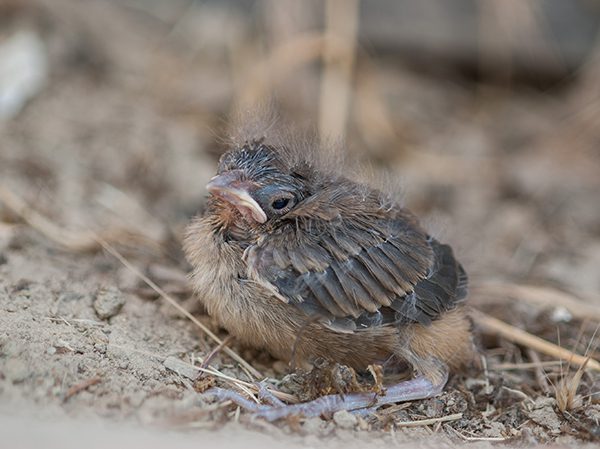
Closeup of a Brown California Towhee fledgling chick on the ground.

A fledgling is a young bird that has grown most of its feathers and recently left the nest for the first time. Fledglings are often seen hopping on the ground, while their parents remain nearby to feed and protect them.

Whenever you see a baby wild animal out of place, take a look around to see where they might have come from. If the animal is in immediate danger like the in the middle of the road, you can often encourage them to move to a safer place without displacing them from their habitat. In most circumstances, making sure that you or your pets cannot harm the animal and allowing them to reunite with their mother gives them the best chance to thrive.

If you find a baby wild animal and are concerned, they may be sick or injured, please review Tufts Wildlife Clinic’s “How to Tell If Baby Wildlife Is Truly Sick or Injured” resource before taking action.


Community Cat Match

Community cats need you now! A generous donor is matching all donations for community cats, up to $20,000, now through July 15, 2026!

Your $9 to help local cats will become $18 and can provide TWICE as many:

    • ️Nutritious meals
    • Life-saving vaccines and medication
    • Toys and scratch pads that help cats engage and play

ARL is the only large animal welfare org in MA with a dedicated agent working with community cats and kittens.

But, with no government funding for this important work, cats must rely on financial support from people like you to get the care they need, when they need it most, 365 days a year.

donate button

Why Your Support Matters

Community cats and kittens are feral, stray, and abandoned cats who live outdoors in the harsh elements. It is estimated over 700,00 cats roam free in Massachusetts with 70,000 in Boston alone.

Without proper shelter and care, community cats are at serious risk of illness and injury. Extreme weather, like what we see in the summer and winter months, can be devasting for these vulnerable animals.

With your help, we can assess colonies and develop TNR (Trap-Neuter-Return) plans for each cat. TNR is one of the most humane and effective ways to stop the cycle of homelessness among cats. Spay and neuter surgeries are low-risk and proven to improve the safety and health of these cats as well as the community as a whole. The plan also includes vaccines, and whether each cat will be returned to the colony, returned to their owner if microchipped, or admitted to an ARL shelter to be put up for adoption if they are friendly.

donate button


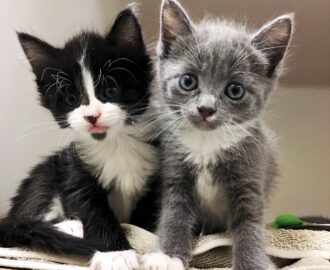
Two kittens sitting next to each otherMeow-o-meter: Tracking Impact
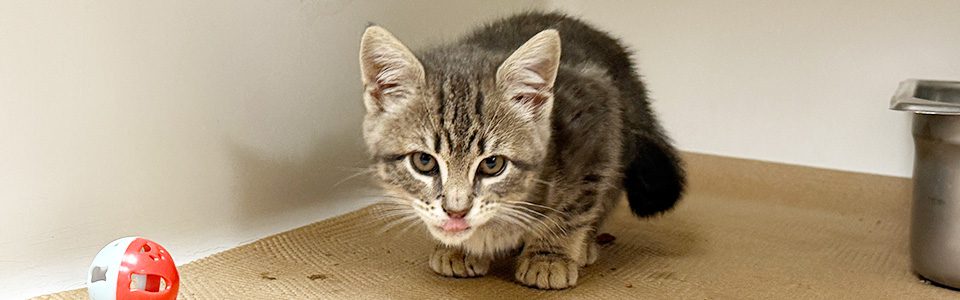
Thanks to the generosity of cat lovers, the following progress has been made possible:

208 TNR’s in 2025
1,138 TNR’s in the last five years

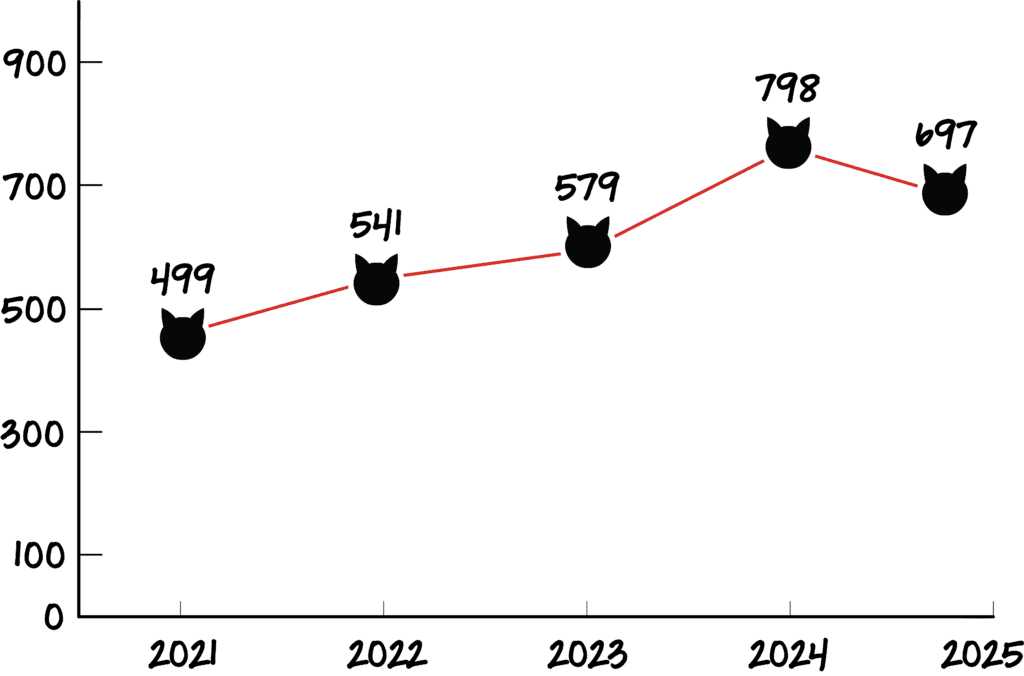
697 Adoptions in 2025
3,115 adoptions in the last five years


Community Cat Adoptions 2021-2025


community cat adoptions from 2021-2025 graph


A Community Cat Adoption Story

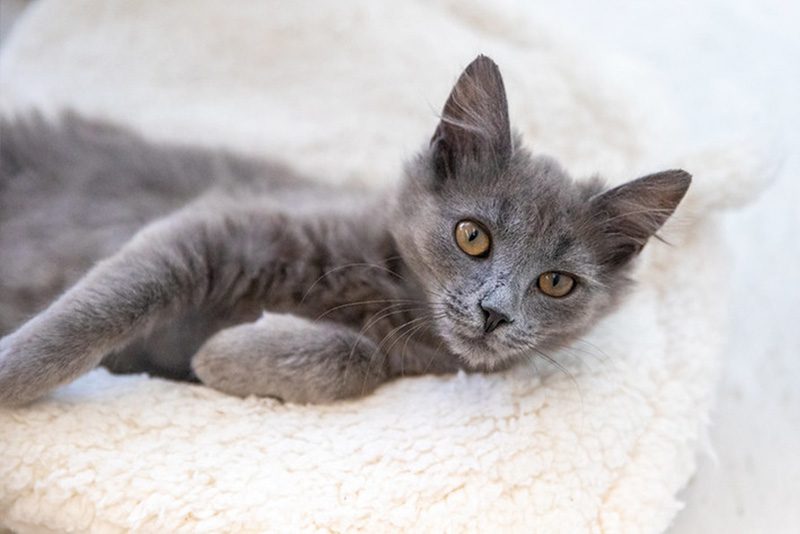
Yogurt, now called Yogi, came to ARL in July 2022 in very poor condition: underweight, flea-infested, with a distended abdomen, a fractured leg, and a severe tail wound. After a leg amputation and four months in WUO (wound of unknown origin) quarantine, he was adopted and quickly settled into his new home with Cupcake, another ARL alum. Now speedy and mischievous, Yogi loves toys, tunnels, cat towers, and watching for his family at the front window, then racing to the door to greet them. His family says he’s been a fun, special addition to their home.

A gray kitten with yellow eyes relaxes on a soft, white, fluffy blanket, looking directly at the camera

Yogurt, now named “Yogi”


Dogs Rescued from Alleged Dogfighting and Breeding Operations

Last week, the Animal Rescue League of Boston (ARL) received six dogs from Humane World for Animals after being rescued from alleged dogfighting operations in Fort Wayne, Indiana, and a large-scale case of alleged neglect at a breeding operation in Harford County, Maryland.

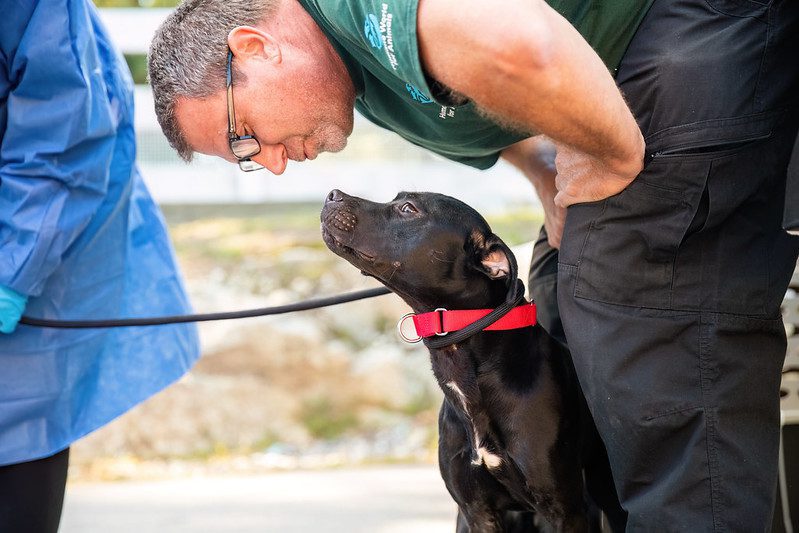
Wrangler, a one-year-old pittie mix, was among the dogs rescued from the dogfighting operation in Indiana, involving 22 animals. The region was under a heat advisory with the heat index reaching approximately 110 degrees when responders arrived at the first property, where they found dogs panting and in filthy hutches and cages. Despite the scorching heat, many of the dogs had no access to water, and some had significant scarring consistent with dogfighting. On the second property, dogs were found on heavy chains outdoors with inadequate protection from the elements – while other dogs were found in cramped cages inside with no water. Responders discovered dogfighting paraphernalia on the properties, including several treadmills and a stand typically used in dogfighting operations to restrain dogs for breeding.

A person leaning over a medium-sized black dog. The dog is looking up at the person

Wrangler

Calendar, Coffee, Fitbit, Slinky and Tassle, all Havanese-mixes between 11 weeks and 5 years old, were rescued from a breeding operation in Maryland, involving over 100 animals. Rescuers were overwhelmed by the odor of ammonia and feces emanating from the residence. Dogs were found roaming throughout the residence, while others were contained in filthy, stacked wire-bottom cages without apparent access to food or water. Some of the dogs were severely matted, and veterinarians noted several suffering from painful dental disease, eye discharge and skin infections. Veterinarians noted many of the dogs were underweight and some were emaciated.

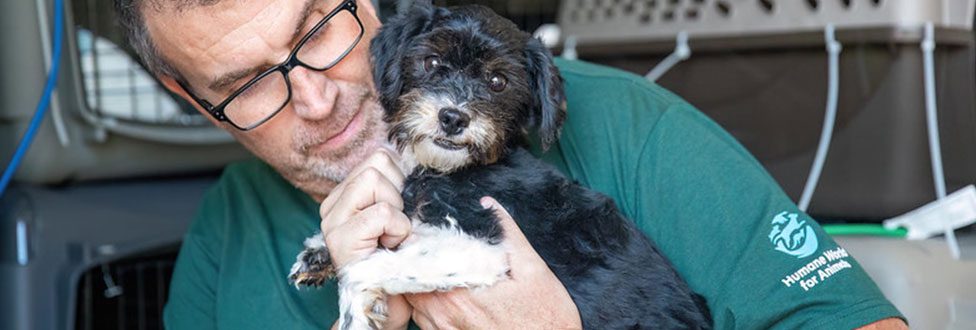
a person wearing PPE, holding two small dogs

Coffee and Fitbit

All of the dogs are fearful, but most are in relatively good health. All six dogs underwent medical evaluations at ARL’s Dedham Animal Care & Adoption Center and will receive veterinary attention and care before being made available for adoption.

two small black and white dogs sitting close together on a bed inside their dog kennel

Slinky and Tassle

“The Animal Rescue League of Boston is honored to welcome these resilient dogs who have endured unimaginable suffering and deplorable conditions. We are dedicated to providing them with the loving homes and lives they truly deserve, and it is our privilege to help them as they begin their journey of healing,” said Dr. Edward Schettino, ARL President and CEO.

Make a donation to support these dogs.

*Note: These dogs are currently not available for adoption. 


ARL Rescues Kitten from Storm Drain Near I-95 On-Ramp in Canton

Kitten was underweight, now in foster care

A six-week-old kitten is safe and sound in foster care after being rescued from a storm drain near the on-ramp to I-95 in Canton by the Animal Rescue League of Boston’s (ARL) Field Services Department.

ARL received a call on July 19 from a passerby who spotted the kitten wandering on Neponset Street in Canton and given his size and the fact he was alone, ARL immediately sprang into action to ensure the safety of the animal.

Pigeon in ARL’s Boston Animal Care & Adoption Center.

Once on-scene, ARL agents scoured a wooded area where the kitten was spotted and after a short time, could hear him crying – from inside a storm drain.

Once the exit pipe was located, agents set a humane trap and played kitten sounds to lure him out of his hiding place.

After a short wait, the kitten came out and was immediately drawn to the food that had been placed in the trap.

When he began ravenously eating, the trap closed, and agents prepared him for the short transport drive to ARL’s Boston Animal Care & Adoption Center.

The kitten, now named Pigeon, was very thin, weighing just over a pound, and was extremely dirty, but was otherwise healthy.

He will remain in foster care for several weeks to gain weight and reach the appropriate age to be neutered and will then be made available for adoption.

ARL reminds the public that anyone who spots a domestic animal in distress or danger is urged to contact ARL Field Services for assistance at (617) 426-9170 x563.


Good Samaritan and Social Media Post Helps Reunite Lost Cat with Family

ARL offers tips should a pet become lost or missing

A lost cat who was missing for three weeks is back home safe and sound thanks to a Good Samaritan, social media, and the Animal Rescue League of Boston (ARL)

Mary, a 13-year-old cat, had never been outdoors, so when she snuck out of her Lowell home, her owner was instantly worried and turned to Facebook to report the missing animal.

Mary reunites with her owner!

About two weeks later, a resident was driving along Chelmsford Road near Route 3 in Lowell, and spotted the cat.

Concerned for her safety, the Good Samaritan pulled over, approached the cat, and took her in.

Mary was not wearing a collar, but was well-groomed and friendly, indicating she was likely an owned cat.

The finder contacted ARL and brought her to the organization’s Boston Animal Care & Adoption Center.

The cat was healthy, and settled in quickly, but meanwhile, a Facebook about the lost cat was spotted by her owner, who immediately reached out to ARL.

Soon after, Mary’s owner arrived at ARL and was reunited with her beloved pet!

When a Pet Goes Missing

An open door, a thunderstorm, slipping out of a collar or harness – situations happen where an animal becomes lost, and when that happens it’s important not to panic and to take steps to increase the likelihood of being reunited.

Take immediate action by following these 5 steps to increase the likelihood of a happy reunion with your pet: 

  • Call the local Animal Control Officer of the town where you live, and of the town that your pet went missing in. List of Massachusetts Animal Control Officers.
  • File a lost report with ARL either in person, over the phone at (617) 426-9170, or online. This lost report is seen by all three ARL locations. The staff will ask you to provide a photo of your pet.
  • Contact your pet’s microchip company if your pet has one, to notify them that your pet is lost. Be sure to confirm that your contact information is current.
  • File a lost report with every shelter within a 60-mile radius of where your pet went missing. Oftentimes, concerned citizens will pick up a stray pet they see on the side of the road and bring it to a shelter that is close to their destination instead of close to where they found the animal. Visit the shelters closest to you as often as possible to check for new incoming lost pets.
  • Don’t give up! Many pets go missing for months before being reunited with their owners. You will have the best chance of finding your missing pet if you utilize all of the provided tips and continue to search for them as long as you can.

Additionally, as Mary’s story showed, social media can be a powerful tool when a pet is missing.

There are many community lost pet social media pages and should your pet go missing, not only can you post to inform your neighbors about your pet, but you can also be notified if someone finds your pet as well.

More helpful lost pet tips.


ARL Rescues Community Cat Living Under Shipping Container in Charlestown Construction Site

ARL offering $20,000 donation match for Community Cat Program

This past week the Animal Rescue League of Boston’s (ARL) Field Services Department rescued an eight-week-old community kitten who was living under a shipping container at a construction site in Charlestown.

ARL’s Community Cat Program focuses on this particularly vulnerable group of animals in Massachusetts.

Community cats are feral, stray and abandoned cats who live outdoors in harsh elements.

ARL has seen a dramatic rise in the number of community cats who need help in recent years and is offering a $20,000 donation match challenge to allow the organization to help even more community cats and kittens.

A resident at an apartment building overlooking the construction site at 75 Alford Avenue (Ryan Playground) in Charlestown contacted ARL’s Field Services Department after witnessing the kitten coming in and out from underneath a shipping container placed on the site.

With the help of Boston’s Park and Recreation Department, ARL was able to gain access to the site and began the trapping process.

It took two days, and in the end the kitten overcame her fear and gave in to her hunger. She emerged from underneath the shipping container and into an awaiting humane cat trap.

The kitten, now named Ally, was transported to ARL’s Boston Animal Care & Adoption Center to undergo veterinary care.

The kitten is in excellent health, is undersocialized but friendly, and she will likely be made available for adoption in the coming weeks.

Community Cat Program Match

With an estimated 700,000 community cats in Massachusetts, 70,000 in Boston alone, these animals live in harsh conditions and without proper care are at-risk for illness and injury.

ARL’s Community Cat Program was launched in 2017 and is the only large animal welfare organization in Massachusetts with a dedicated agent working exclusively with community cats and kittens.

In 2024 the program saw a record number of community cats, nearly 2,000, and the organization has found loving homes for more than 2,700 community cats and kittens over the past five years.

After identifying a community cat colony, ARL formulates a Trap-Neuter-Return (TNR) plan, to evaluate, vaccinate and spay/neuter cats from the colony.

TNR is one of the most humane and effective ways to stop the cycle of homelessness among cats. Cats that are truly feral are returned to the colony, while those suitable as pets are adopted into homes.

ARL receives no government grants or funding and relies solely on the generosity of individuals to ensure these vulnerable animals receive the care they need and deserve.

Through June 30, any donation towards ARL’s Community Cat Program will be matched, dollar-for-dollar to help twice as many community cats in need.

Help ARL continue this important work.