Prepare Your Pet for the Upcoming Nor’easter
Make sure your pet is ready before the storm arrives
A powerful nor’easter is expected to impact New England, bringing strong winds, heavy rain, coastal flooding, and the potential for power outages.
As you prepare your home for the approaching storm, don’t forget to plan ahead for your pets too!
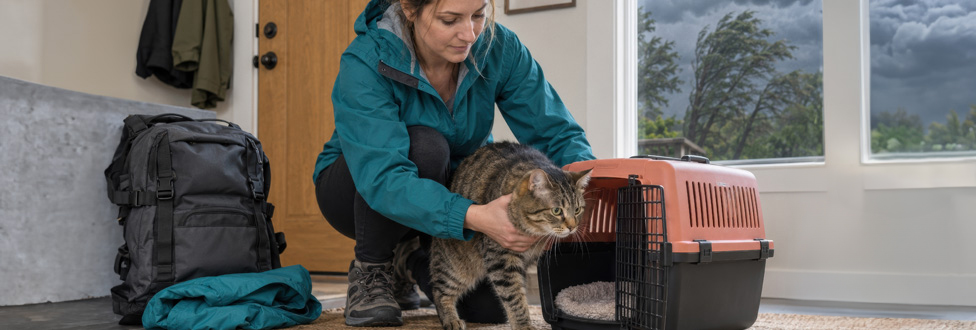
Severe weather can create unexpected situations, and having supplies ready ahead of time can help keep you and your pets safe. In the event of a power outage, flooding, evacuation, or other emergency, the Animal Rescue League of Boston (ARL) recommends having a sturdy, comfortable crate or carrier on hand and preparing a pet emergency kit that is packed and ready to go.
Pack a Pet Emergency Kit
Keep your pet’s emergency supplies together in a water-resistant backpack or lightweight bag that can be easily grabbed if you need to leave home.
Your kit should include:
-
- Food and water, at least three days’ worth
- Portable food and water bowls
- Any necessary medications, ideally enough for two weeks
- Pet first aid supplies
- Collar or harness with current ID tags
- Extra leash
- Cat Litter, litter box, or other sanitation supplies
- Paper towels and trash bags
- Copies of veterinary and vaccination records stored in a waterproof container
- A recent photo of you with your pet, in case you are separated
- Familiar toys, treats, or bedding to help provide comfort
Don’t forget to regularly check your emergency kit and replace expired food, medications, or other supplies as needed.
Plan Ahead for Your Pet’s Veterinary Needs
Before severe weather arrives, take a moment to make sure you have enough of any medications your pet may need and that important veterinary and vaccination records are easy to access.
If your pet has ongoing medical needs, planning ahead can help ensure you have the supplies and information you need if travel becomes difficult or your normal routine is disrupted by the storm.
ARL’s full-service, high-quality veterinary hospital, Boston Veterinary Care (BVC), is committed to helping pets stay healthy throughout every season. Located in Boston’s South End, BVC provides compassionate veterinary care while supporting ARL’s mission to help animals in need.
Learn more about BVC and its services.
Make Your Pet Easy to Identify
Strong winds, unfamiliar noises, or an emergency evacuation can create stressful situations for pets. If you and your pet become separated, you’ll want to be able to locate and identify them as quickly as possible.
Make sure the information on your pet’s collar and identification tags is up to date.
Microchipping your pet is another important way to help reunite you if you become separated. If your pet is already microchipped, take a moment before the storm to make sure your contact information is current.
It’s also a good idea to keep a recent photo of your pet, as well as a photo of you and your pet together, with your emergency supplies.
Know Where to Turn for Additional Support
ARL is not an emergency response agency and does not provide public emergency sheltering or disaster-response services during severe weather events. If you need additional assistance or information during the nor’easter, there are resources available to help you plan for the safety of both you and your pets.
The American Red Cross offers pet disaster-preparedness information, including guidance on emergency kits, evacuation planning, and identifying safe places to take your pets during an emergency.
Massachusetts residents can also visit the State of Massachusetts Animal Response Team (SMART) for information and resources related to animal emergency preparedness and disaster response throughout the Commonwealth.
If you are facing an immediate emergency, follow instructions from your local emergency management and public safety officials. If your pet is experiencing a medical emergency, contact an emergency veterinary hospital.
Prepare Now
Don’t wait until the weather takes a turn to gather supplies. Take some time before the nor’easter arrives to check your pet’s food, medications, identification, carrier, and other emergency essentials.
A little preparation now can help ensure that every member of your family, including the four-legged ones, is ready for the storm.
Stay safe, New England!