
Category: Blog

ARL Partners with New England Patriots for Training Camp Adoption Event

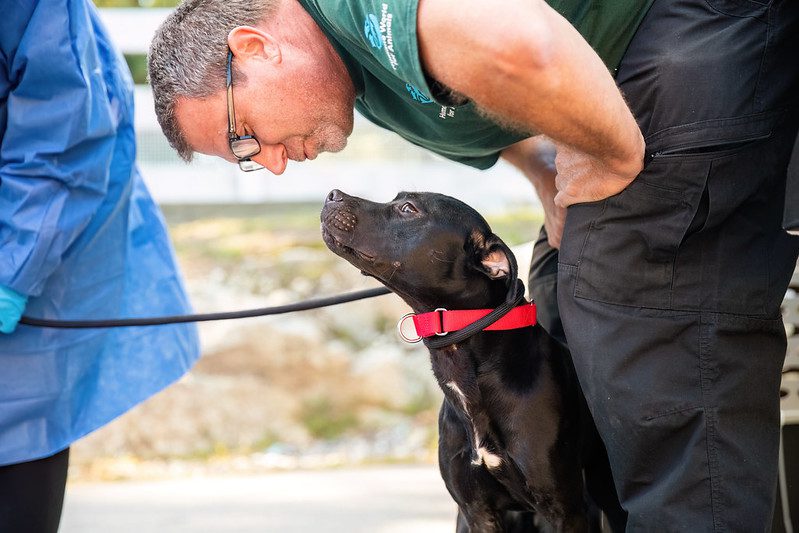
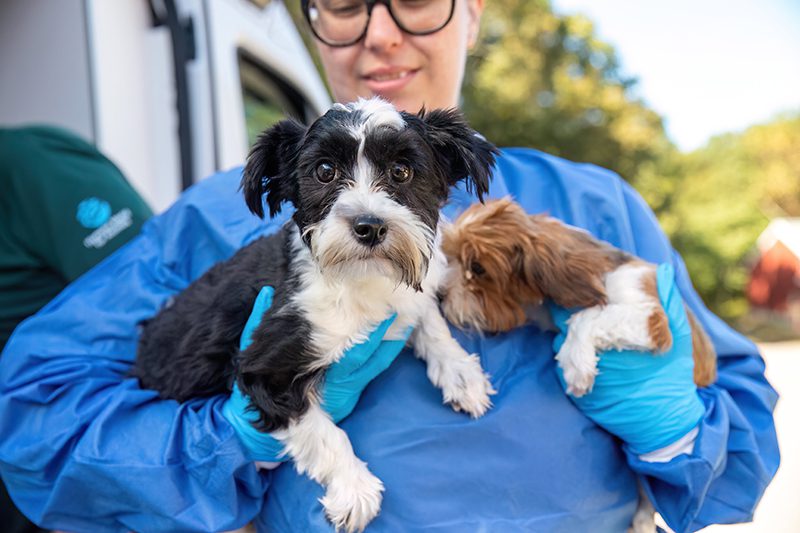
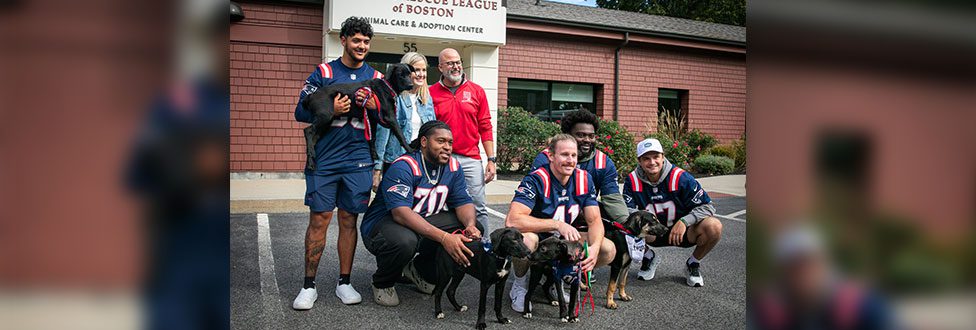
As the New England Patriots kicked off the first day of training camp, a special adoption event at Gillette Stadium with the Animal Rescue League of Boston (ARL) kicked off a lifetime of love for more than three dozen families who took home a new furry family member.

ARL joined two other animal welfare organizations to find homes for 41 puppies and young adult dogs, the first such event to held at Gillette Stadium during training camp.

New England Patriots owner Robert Kraft and his wife and ARL board member Dr. Dana Kraft have a deep love for animals, particularly their dog Heisman, and the adoption effort was largely spear-headed by Dr. Kraft.

“Dana is on the board of ARL and she mentioned to me that the number of dogs in shelters is higher than it’s ever been,” said Mr. Kraft. “I don’t know if that’s because of what’s going on with the economics of our country right now, but I do know how these dogs can bring so much happiness and love.”

The adoption event included a press conference the previous day where players and head coach Mike Vrabel brought two ARL puppies to the podium to answer questions from the media.

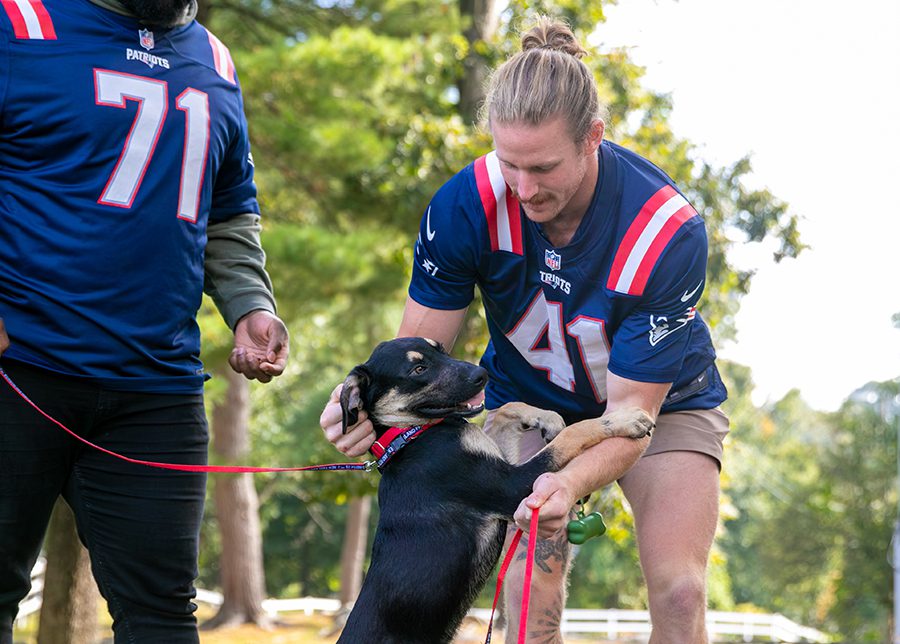
The kickoff of training camp also included a special moment where players and coach Vrabel walked onto the field with some of the adopted puppies to present them to their new families.

As fans filed into training camp, they were able to meet and interact with all the available animals, talk with adoption staff, and also learn more about the programs and services that ARL offers.

The event was tremendously successful, and ARL wishes to thank the Patriots for their partnership and passion to help find homes for as many animals as possible.

What a way to kick off the 2025-2026 season!


ARL, MA State Police to Host Too Hot for Spot Campaign Demo

Demonstration part of ARL’s annual Too Hot for Spot summer safety campaign

This week, the Animal Rescue League of Boston (ARL) and Massachusetts State Police welcomed members of the media to ARL’s Dedham Campus for a hot car demonstration as part of ARL’s annual Too Hot for Spot® safety campaign, which has educated pet owners about summer safety for over a decade.

ARL is marking 11 years of the Too Hot for Spot campaign, but unfortunately, we are still seeing plenty of instances where an animal’s life is put in danger due to being left in a hot vehicle, several of which have happened in just the past month.

With temperatures this summer being well above average, it’s imperative this message reaches as many pet owners as possible.

Leaving an animal in a hot car is the number one cause of deadly heatstroke in pets. When temperatures rise, so do concerns about animal safety.

Even when the mercury dips below 80 degrees, the threat for heat stroke still exists.

Within five minutes’ time, a vehicle’s interior temperature can rise above 118 degrees on a 75-degree day, even with the windows cracked.

This week’s demonstration occurred during an overcast day, with temperatures in the low 80’s.

In less than 10 minutes, the thermometer inside the vehicle soared to over 115 degrees, demonstrating the dangers that exist during the summer months.

Additionally, many modern vehicles feature an automatic shut-off feature after a certain amount of time when the vehicle is left in park and running – meaning that even if a pet owner leaves their animals in a car with the air conditioning running, the vehicle may shut off, leaving the animals susceptible to deadly heat stroke.

It is also illegal in Massachusetts to keep an animal in a hot vehicle, and law enforcement across the Commonwealth will be on the lookout this summer.

Visit arlboston.org/too-hot-for-spot to learn important pet safety tips and guidelines.

ARL wishes to thank the Massachusetts State Police, the Massachusetts Department of Transportation, and Herb Chambers for their continued support and partnership in ARL’s Too Hot for Spot summer safety campaign.


ARL, Animal Advocates Gather at Massachusetts State House for Lobby Day for Animals

Animal welfare organizations collaborate to lobby for animal-protection legislation

This past week, the Animal Rescue League of Boston’s Advocacy team joined other animal welfare organizations at the Massachusetts State House for Lobby Day for Animals, to help citizen animal advocates make an impact by meeting and encouraging their elected officials to prioritize animal-protection legislation.

ARL presented briefings on current pieces of legislation and also offered guidance to those in attendance on how to effectively lobby their elected officials to help garner support for these proposed bills.

Rep. Aaron Michlewitz receives the Legislator of the Year award.

Priority bills included:

An Act to maintain stable housing for families with pets (H.1559); An Act to maintain stable housing for families with pets in an economic crisis and beyond (S.1022)

Provides housing protections during states of emergency and immediately afterward, preventing animals from being used as a reason for eviction. Prohibits insurance companies from refusing coverage, canceling, or increasing rates on the basis of dog breed.

An Act to codify pet-friendly elderly housing policies and ensure pet parity across housing authorities (H.1476)

Protects programs to allow pets in elderly housing authorities and ensures pets and their families can stay together in certain state-funded housing.

An Act banning the retail sale of dogs, cats, rabbits, and guinea pigs in pet shops (S.618;HD.4490) Proposed bill would prohibit the sale of dogs, cats, and rabbits, and guinea pigs in pet shops throughout Massachusetts. Would not prohibit pet shops from partnering with shelters or rescues to display/facilitate adoptions.

An Act banning the retail sale of dogs, cats, and rabbits in new pet shops (H.967;S.651)

Proposed bill would prohibit the sale of dogs, cats, and rabbits in new pet shops throughout Massachusetts. Would not prohibit pet shops from partnering with shelters or rescues to display/facilitate adoptions.

An Act to provide additional funding for animal welfare and safety programming (S. 639)

This bill would enable additional monies to be directed to the Mass Animal Fund for the purpose of spaying, neutering or vaccinating homeless dogs and cats, or those that live with low-income families, by stipulating that administrative fines, issued pursuant to Section 37 of Chapter 129 (“Enforcement actions; jurisdiction of commissioner of agriculture, district and superior courts”), would go to the Fund.

Celebrating Past Animal Victories

ARL and other animal protection organizations were also pleased to be able to present House Chair of Ways and Means (and ARL’s Representative in the South End) Aaron Michlewitz with the Legislator of the Year Award.

Under Chair Michlewitz’s leadership, the House advanced the most standalone animal bills in any session in recent history!

Recognition was also presented to the numerous legislative sponsors of the bills signed into law earlier this year including An Act to Increase Kennel Safety aka Ollie’s Law; An Act Regulating the Use of Elephants, Big Cats, Primates, Giraffes and Bears in Traveling Exhibits and Shows;  An Act Prohibiting Inhumane Feline Declawing; An Act Providing for the Humane Protection of Animals; and An Act Promoting Animal Welfare and Further Regulating the Reporting of Animal Cruelty, Abuse or Neglect.

Learn more about ARL’s Legislative Priorities.


Good Samaritan and Social Media Post Helps Reunite Lost Cat with Family

ARL offers tips should a pet become lost or missing

A lost cat who was missing for three weeks is back home safe and sound thanks to a Good Samaritan, social media, and the Animal Rescue League of Boston (ARL)

Mary, a 13-year-old cat, had never been outdoors, so when she snuck out of her Lowell home, her owner was instantly worried and turned to Facebook to report the missing animal.

Mary reunites with her owner!

About two weeks later, a resident was driving along Chelmsford Road near Route 3 in Lowell, and spotted the cat.

Concerned for her safety, the Good Samaritan pulled over, approached the cat, and took her in.

Mary was not wearing a collar, but was well-groomed and friendly, indicating she was likely an owned cat.

The finder contacted ARL and brought her to the organization’s Boston Animal Care & Adoption Center.

The cat was healthy, and settled in quickly, but meanwhile, a Facebook about the lost cat was spotted by her owner, who immediately reached out to ARL.

Soon after, Mary’s owner arrived at ARL and was reunited with her beloved pet!

When a Pet Goes Missing

An open door, a thunderstorm, slipping out of a collar or harness – situations happen where an animal becomes lost, and when that happens it’s important not to panic and to take steps to increase the likelihood of being reunited.

Take immediate action by following these 5 steps to increase the likelihood of a happy reunion with your pet: 

  • Call the local Animal Control Officer of the town where you live, and of the town that your pet went missing in. List of Massachusetts Animal Control Officers.
  • File a lost report with ARL either in person, over the phone at (617) 426-9170, or online. This lost report is seen by all three ARL locations. The staff will ask you to provide a photo of your pet.
  • Contact your pet’s microchip company if your pet has one, to notify them that your pet is lost. Be sure to confirm that your contact information is current.
  • File a lost report with every shelter within a 60-mile radius of where your pet went missing. Oftentimes, concerned citizens will pick up a stray pet they see on the side of the road and bring it to a shelter that is close to their destination instead of close to where they found the animal. Visit the shelters closest to you as often as possible to check for new incoming lost pets.
  • Don’t give up! Many pets go missing for months before being reunited with their owners. You will have the best chance of finding your missing pet if you utilize all of the provided tips and continue to search for them as long as you can.

Additionally, as Mary’s story showed, social media can be a powerful tool when a pet is missing.

There are many community lost pet social media pages and should your pet go missing, not only can you post to inform your neighbors about your pet, but you can also be notified if someone finds your pet as well.

More helpful lost pet tips.


Summer Pet Safety Goes Beyond Tick Bites

Tips to Protect Your Pet From Hidden Summer Dangers

For pet owners, ticks and tick-borne illnesses naturally become a concern when the weather warms up.
However, bites and stings from other insects can impact the comfort and overall health of pets.

Ants, mosquitoes, spiders, bees, among others, can cause a myriad of impacts on our pets – from minor skin irritation to life-threatening allergic reactions.

Summer insect concerns go beyond ticks.

As with ticks, it’s important to check our pets when returning from the outdoors.

If your pet has been bitten or stung, here are some non-emergent remedies to try at home:

  1. You want to remove the stinger, or the head of the insect if it remains embedded. Use sterilized tweezers to ensure foreign debris is removed in its entirety.
  2. Applying ice to a sting or bite reduces swelling and pain.
  3. Antihistamines and steroids can be administered to help reduce swelling and pain, however, always consult with your regular veterinarian before giving any medications to your pet.
  4. While improvement after a sting or bite can be expected after a few days, it’s important to monitor the injury site should the injury worsen. You also want to make sure your pet isn’t licking or chewing on the affected area, as this could put the animal at risk for infection.

The vast majority of dogs will recover quickly from a sting or insect bite; however, just like people, some dogs can be prone to severe allergic reactions.

Should your pet display the following symptoms, seek veterinary care immediately:

  • Swollen face or muzzle
  • Difficulty breathing
  • Vomiting
  • Lethargy
  • Persistent swelling or redness at the injury site

Keep your pets healthy and safe this summer with these summer safety tips.


Pet Thunderstorm Safety

6 Tips to Comfort Your Pet During a Storm

(Hint: You’ll both rest easier!)

Storms may just be another part of summer, but for many pets, loud crashes of thunder, flashes of lightning, and sudden changes in weather can trigger fear and anxiety in even the calmest animals.

According to the National Severe Storms Laboratory, there are about 100,000 thunderstorms in the U.S. each year. If your dog suffers from astraphobia—a fear of thunder—that’s a lot of stressful moments (and sleepless nights) for both of you.

Recognize the Signs

Dogs experiencing thunderstorm anxiety may exhibit some of the following behaviors:

  • Trembling or shaking
  • Panting or drooling
  • Hiding
  • Whining or barking excessively
  • Pacing or restlessness
  • Scratching doors or furniture
  • Destructive chewing

Even small cues like lightning flashes, howling winds, rain hitting the roof, or a shift in air pressure can trigger fear.

Prepare Before the Storm

    The best time to help your pet cope with a thunderstorm is before it arrives. If severe weather is in the forecast, make sure your pet has had plenty of exercise, gone outside for bathroom breaks, and has access to their safe space before the storm begins. It’s also a good idea to ensure your pet is wearing current ID tags and that their microchip information is up to date.

    Tips to Help Your Pet During the Storm

    If your pet bolts for cover at the first clap of thunder, here are six practical tips to help them feel safer — and help you get some peace of mind:

    1. Create a Safe Space: Fearful pets often seek out a quiet, enclosed spot when they’re scared. Make sure they have access to a cozy hideaway indoors. A crate works well for many dogs — add a soft blanket, a favorite toy or two, and drape a light sheet over the top to create a den-like feel.
    2. Offer Comfort and Reassurance: Your presence can go a long way in calming your pet. If they like to snuggle or be petted, stick close and offer comfort. You might also consider a snug-fitting anxiety wrap or “thunder vest,” which can have a soothing effect on some pets.
    3. Use Distraction Techniques: Engaging your pet with a favorite toy or game can help divert their attention from the storm. If they remain calm, reward them with treats and praise to reinforce that brave behavior.
    4. Block the View: Confine your pet to a windowless room, if possible. If not, pull down the blinds and close the curtains to cut off any visual stressors.
    5. Drown Out the Noise: Play soft music, turn on a fan, or keep the TV going to help mask the sound of thunder. This can be especially helpful for pets with sensitive hearing.
    6. Consider Behavioral Support: For pets with severe thunderstorm anxiety, training and behavior modification techniques may help reduce fear over time. Talk with your veterinarian or a qualified animal behavior professional about creating a long-term plan to help your pet feel more comfortable during storms.The Animal Rescue League of Boston (ARL) offers a FREE Pet Behavior Helpline to assist with behavioral questions regarding pets. You can contact them at (617) 226-5666 or email behaviorhelpline@arlboston.org and they will respond within 48 hours.

    What About Medications or Supplements?

    If your pet experiences extreme anxiety, talk to your veterinarian. They can recommend safe and effective medications or natural supplements tailored to your pet’s needs. Never administer anything without veterinary guidance — what works for one pet may not be safe for another.

    Every Pet Responds Differently to Thunderstorms

    With preparation, patience, and the right support, you can help your furry friend feel safer and more comfortable when stormy weather rolls in.

    More summer pet safety advice.


    You Can Help Vulnerable Cats This Kitten Season!

    Every year, the Animal Rescue League of Boston (ARL) helps hundreds of community cats across Massachusetts—but as the weather warms up, we face a growing crisis: a surge in kittens born in need of intensive care.

    These kittens are at high risk from the moment they’re born, facing threats like:

      • Harsh weather
      • Illness and injury
      • Predators
      • Lack of food and shelter

    These fragile babies urgently need your help!

    Kitten Kuddler Wall of Honor

    Thanks to these kind cat lovers for supporting kittens with gifts of $100 or more

    Martina Roth
    Nathan Hasson
    Christina Kowalewski
    Ruibing Wang
    Anthony DellaSala
    Joan MacDonald
    Michelle Bruneau
    Judith Cassano
    Linda Perry
    Kelley Creedon
    Judith LeBlanc
    Elinor Milder
    Pepper Hayes
    Gregory Pirrone
    Carrie Deangelo
    Richard Tourangeau
    Ellen Munley
    Samantha Cornebise
    Patricia Taylor
    Ernst Berndt
    Elise Merchant
    Cheryl Sexton

    Donate Now to help community cats

    Send Supplies from Our Wish Lists

    Want to help in another way? You can send urgently needed items directly to us by shopping our Kitten Shower Registry via:

    These supplies go directly to kittens and cats in our care.

    ARL’s Lifesaving Community Cats Program

    ARL is proud to be the only large animal welfare organization in Massachusetts with a full-time Community Cat Agent. Since 2017, our Trap-Neuter-Return (TNR) program has helped over 3,000 community cats.

    ARL community cats agent setting up humane cat traps outside

    An ARL community cat agent setting up humane cat traps.

    Here’s how it works:

    1. Our Community Cat Agent identifies and evaluates colonies across the state.
    2. Cats are humanely trapped and brought to an ARL Animal Care and Adoption Center.
    3. They receive essential veterinary care: vaccinations, spay/neuter surgery, and behavioral assessments.
    4. Socialized cats are placed for adoption. Others are safely returned to their colonies.

    ARL Awarded Grant from “I’m Animal Friendly” License Plate Funds

    Grant provides subsidized spay/neuter surgery for more than two dozen pet owners

    The Animal Rescue League of Boston (ARL) is happy to announce the organization is a recipient of a 2025 grant from the MA “I’m Animal Friendly” license plate program.

    Funds will be used towards ARL’s community-based programs to provide subsidized spay/neuter services for more than two dozen pet owners in Boston.

    This month ARL’s Spay Waggin’® held two spay/neuter clinics, one at the Franklin Park Zoo, the other at a private business in Mattapan, to provide the service for local pet owners.

    Clients included one pet owner who is a client of ARL’s Wellness Waggin’ and was recently reunited with their cat after the animal had snuck out.

    ARL’s Spay Waggin’ is a mobile veterinary surgical vehicle that provides low-cost spay and neuter services in Greater Boston, Southeastern Massachusetts, and Cape Cod.

    The Wellness Waggin’ brings low-cost pet wellness care directly into Boston communities that need it most including Dorchester, Roxbury, Mattapan, Hyde Park, and East Boston.

    “Pets are family, and the Animal Rescue League of Boston continues to be grateful to the Massachusetts Animal Coalition and their commitment to provide grants to help provide spay/neuter services for pet owners in need,” stated ARL President and CEO Dr. Edward Schettino. “Through this grant, ARL has been able to help more than two dozen pet owners, and ensure that their animals are happy, healthy and will continue to thrive.”

    Anne Lindsay, founder and president of the Massachusetts Animal Coalition, says, “An important way to decrease the population of unwanted pets is to spay and neuter any animal we can get our hands on.  For the past 20 years, the ‘I’m Animal Friendly’ License Plate Program has supported these efforts by providing funding for these necessary surgeries.”

    The “I’m Animal Friendly” license plates are a program of the Massachusetts Animal Coalition.

    Funds are granted annually to organizations that demonstrate a need for funding and provide low-cost spay/neuter services.

    Since the program’s inception, MAC has awarded over $3,300,000 to many deserving organizations.


    ARL Hosts Community Rabies Vaccine Clinics

    Rabies vaccine state-mandated for all dogs, cats, and ferrets

    The Animal Rescue League of Boston (ARL) recently held its annual rabies clinics at its Boston, Dedham, and Brewster Animal Care and Adoption Centers, vaccinating more than 200 pets.

    In Massachusetts, all dogs and cats over six-months-old, as well as ferrets, must be vaccinated against rabies, and these clinics are an important piece to ensuring pet owners have access to free or low-cost vaccination options for their pets.

    The clinics offered free rabies vaccinations for residents of Boston, Dedham, and Brewster, and just $10 for non-residents – a substantial savings compared to having a pet vaccinated in a typical veterinarian office setting.

    Additionally, microchips for pets were also offered for $10.

    Across the three separate events, more than 200 pets were vaccinated, and ARL is thrilled to be able to annually offer this vital service for pet owners in the communities ARL calls home.

    “ARL has been a part of the Boston, Dedham, and Cape Cod communities for well over 100 years, and we are proud to be able to offer free or low-cost services to local pet owners whenever possible,” stated ARL President and CEO Dr. Edward Schettino.


    ARL Rescues Community Cat Living Under Shipping Container in Charlestown Construction Site

    ARL offering $20,000 donation match for Community Cat Program

    This past week the Animal Rescue League of Boston’s (ARL) Field Services Department rescued an eight-week-old community kitten who was living under a shipping container at a construction site in Charlestown.

    ARL’s Community Cat Program focuses on this particularly vulnerable group of animals in Massachusetts.

    Community cats are feral, stray and abandoned cats who live outdoors in harsh elements.

    ARL has seen a dramatic rise in the number of community cats who need help in recent years and is offering a $20,000 donation match challenge to allow the organization to help even more community cats and kittens.

    A resident at an apartment building overlooking the construction site at 75 Alford Avenue (Ryan Playground) in Charlestown contacted ARL’s Field Services Department after witnessing the kitten coming in and out from underneath a shipping container placed on the site.

    With the help of Boston’s Park and Recreation Department, ARL was able to gain access to the site and began the trapping process.

    It took two days, and in the end the kitten overcame her fear and gave in to her hunger. She emerged from underneath the shipping container and into an awaiting humane cat trap.

    The kitten, now named Ally, was transported to ARL’s Boston Animal Care & Adoption Center to undergo veterinary care.

    The kitten is in excellent health, is undersocialized but friendly, and she will likely be made available for adoption in the coming weeks.

    Community Cat Program Match

    With an estimated 700,000 community cats in Massachusetts, 70,000 in Boston alone, these animals live in harsh conditions and without proper care are at-risk for illness and injury.

    ARL’s Community Cat Program was launched in 2017 and is the only large animal welfare organization in Massachusetts with a dedicated agent working exclusively with community cats and kittens.

    In 2024 the program saw a record number of community cats, nearly 2,000, and the organization has found loving homes for more than 2,700 community cats and kittens over the past five years.

    After identifying a community cat colony, ARL formulates a Trap-Neuter-Return (TNR) plan, to evaluate, vaccinate and spay/neuter cats from the colony.

    TNR is one of the most humane and effective ways to stop the cycle of homelessness among cats. Cats that are truly feral are returned to the colony, while those suitable as pets are adopted into homes.

    ARL receives no government grants or funding and relies solely on the generosity of individuals to ensure these vulnerable animals receive the care they need and deserve.

    Through June 30, any donation towards ARL’s Community Cat Program will be matched, dollar-for-dollar to help twice as many community cats in need.

    Help ARL continue this important work.